Previously: Part 1 and Part 2.

Islam in Norway
by The Observer
This is the third and final instalment in a three part series in which I examine left-wing media bias in Norway, the Left’s moral support for anti-democratic forces in the Middle East, and Norwegian Muslims, views on democracy and traditional Western values.
This final article will take a closer look at the Muslim community in Norway. We will try to paint a clearer picture of the values they represent, and find out how compatible these are with traditional Norwegian values. We’ll also examine whether there are any compelling reasons for Norwegian authorities to adopt a more critical attitude towards Islam.
In the first instalment, ‘Left-wing media bias in Norway’, I presented evidence that the media in Norway are biased in their portrayal of Islam, and that they are reluctant to write anything that could be construed as incriminating Islam following Islamic terrorist attacks, as opposed to the collective responsibility placed on the conservative, anti-immigration community in Norway following the 22/7 attacks in Oslo.
The enormous torrent of hate-filled rhetoric that was directed at the conservative community in Norway following the Oslo attacks constituted a complete change of tactics by the media. Traditionally the Norwegian media have always attempted to exculpate Muslims following Islamic terrorist attacks and they have always gone to great lengths to portray Islam and Muslim in a positive light after such attacks. This rule has been followed rigorously despite attempts by the Muslims themselves to find justification for such attacks, and despite numerous opinion polls indicating that many within the Muslim community condone such attacks. In Norway any attempts to link Muslims to terrorists attacks or to even hint that Islamic terrorists find validation in the Koran to carry out such attacks are feverishly dismissed as racism and ‘Islamophobia’ by the very same media which actively sought to smear members of the Norwegian conservative community after the Oslo attacks.
So let’s take a closer look at the Muslim community in Norway and attempt to determine whether there is any truth to the claim that Muslims living in the country are peace-loving, and that they embrace traditional Western values. In order to support or reject such a claim, it’s important to study the views and behaviour of the Muslims who live here, and to ascertain whether they change their views over time.
In this essay I intend to go back almost twenty-five years to find out whether such changes have occurred. We’ll also take a closer look at the values the leadership of the big Islamic organizations in Norway advocate, as they are the collective voice of the Muslim community. If we find strong evidence that suggest that they exhibit conflicting views on such issues as democracy and the legitimacy of terrorists attacks, then it’s reasonable to conclude that this is also the case with ordinary Muslims living in Norway.
The first Muslims arrive
Let’s go back to the beginning.
The first Muslims that arrived in Norway came in the late 1960s, and were young Pakistani males who showed up in Norway equipped with tourists’ visas and not much else. It soon became apparent that these Pakistanis had ulterior motives for coming here. They had not come to Norway for a holiday; they had come here looking for work. And after having circumvented the problem for some time, and no doubt after having been influenced by several harrowing newspaper reports over the miserable living conditions that these Pakistanis had to endure, it was the government of the time decided that these young men should be allowed to work for a limited period until they could afford to go back home to Pakistan.
However, events took a different turn, and the Pakistanis were eventually allowed to stay on permanently. In time they were also granted family reunification privileges. This was the catalytic event that started the growth of Islam in Norway. The second big wave came later on in the 1980s and 1990s, when Norway experienced another massive influx of individuals ‘fleeing’ from the Islamic world and wanting to settle in Norway under the pretence of being politically persecuted in their homelands.
But even though there has been a Muslim presence in Norway since the late 1960s, Norwegians weren’t really exposed to Islamic values until the late 1980s when Ayatollah Khomeini issued a fatwa on the author Salman Rushdie, and the Muslim community in Norway started to express public support for the fatwa. This caused many Norwegians to take a less favourable view of the religion and its practitioners. The democratic nature of the Muslim community — or the lack thereof — became even more apparent when the publishing company, Aschehoug translated The Satanic Verses into Norwegian. This decision prompted the Muslims to stage huge demonstrations in which thousands took to the streets in Oslo and demanded that the book be withdrawn from Norwegian bookshelves, and that anyone involved with the distribution of the book should be punished.
And as this newspaper article shows, the police in Norway decided to take these threats seriously:
Due to security concerns the book was printed at a secret location, and the police implemented various safety measures for the people involved with the publishing of the book. Because in the aftermath of the release unrest followed in several countries: threats, firebombing of bookstores, killings and violent demonstrations that ended in riots. In the period between February and May 1989 there were demonstrations in Oslo, Mumbai, Stockholm, Bonn, Bangkok, Karachi, Srinagar and Rotherham.
Here’s a chronological list detailing the events that took place in Norway:


 I can understand why Israelis who have had to endure terrorist attacks from their Arab neighbours for decades and who have lost significant numbers of their compatriots in this terror were eager to point out that the Norwegian Left have gone a very long way in condoning the behaviour of militant Palestinian terrorist organizations. In an interview with the Israeli newspaper Maariv, on July 25, 2011, the Norwegian ambassador to Israel, Svein Sevje attempted to draw distinctions between the terrorist attack in Norway and the numerous terrorist attacks that have plagued Israel. In the interview Mr Sevje says that it is easier to understand that militant Palestinians resort to terror because of Israel’s ‘occupation’ of Palestinian land.



 The decision to fund the Hamas-led government was accompanied by cheers from the media, including newspaper Aftenposten which praised this as a
  During the
 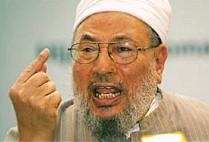 In a Friday sermon on February 3, 2006, Yousef Al-Qaradhawi, the spiritual leader of the Muslim Brotherhood, exhorted worshippers to show rage to the world in response the cartoons depicting Muhammad. The sermon was aired on TV. The following day, the Danish and Norwegian embassies in Syria were set ablaze by an angry mob. A few days later, a delegation led by Mohammed Hamdan of Norway’s Islamic Council and a senior pastor representing Oslo’s bishop visited Qatar to meet Mr. Qaradhawi. The trip recieved support from the Norwegian government. Qaradhawi accepted the apology that Velbjørn Selbekk had issued on February 10.
  It frightens me that he presents himself as an authority that can grant or revoke protection. Does this mean that [Minister] Bjarne Håkon Hanssen thinks that the next time I feel threatened because of something I have written, I should contact the Islamic Council, not the police? Sadly, the government, in their eagerness to end the current troubles, have made the authoritarian forces stronger.
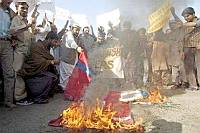 The status given to non-Muslim dhimmis who accept Islamic rule is technically referred to as “protected.” During the Cartoon Jihad, the left-wing government demonstrated in public that Norwegian authorities did not control the security of their citizens, and thus had to accept Muslim intervention to secure Norwegians’ safety. This amounted to the acceptance of Islamic rule according to sharia laws, a view which was subsequently strengthened by payments to Muslims both at home and abroad. Undoubtedly these payments were viewed by Muslims as jizya, the “protection money” non-Muslims are required to pay in willing submission (Koran, 9:29), as a sign of their inferior status vis-à-vis Islam.
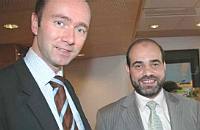 Trond Giske, Minister of Culture and Church Affairs from the Labor Party, met with Mohammed Hamdan, the then head of Norway’s Islamic Council, a few months after the Cartoon Jihad and announced that government subsidies for the Islamic Council would be raised from sixty thousand kroner a year to half a million. That’s more than a seven hundred percent increase in a single year.
 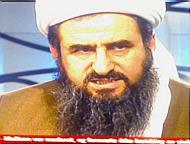 In contrast to the Selbekk case, Mullah Krekar, the former leader of the Islamic terror group Ansar al-Islam, still continues to be permitted to live in Norway — even though he has
 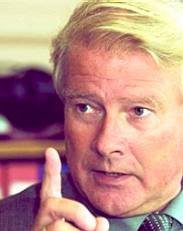 In 2005 the police issued a mobile security alarm to leader of the right-wing Progress Party, Carl I. Hagen. Hagen had criticized Islam, and could see no similarity with the concept of morality and justice found in Christianity. He also said that if Israel loses in the Middle East, Europe will succumb to Islam next. He thinks that Christians should support Israel and oppose Islamic inroads into Europe. In an unprecedented step, a group of Muslim ambassadors to Norway blasted Carl I. Hagen in a letter. Other politicians quickly caved in and condemned Hagen, including then-Prime Minister Kjell Magne Bondevik of the Christian Democrats.
 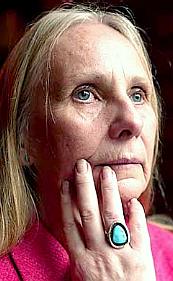 In 2001, Unni Wikan, a professor of social anthropology at the University of Oslo, told Dagbladet that “Norwegian women must take their share of responsibility for these rapes” because Muslim men found their manner of dress provocative. The professor’s conclusion was that “Norwegian women must realize that we live in a Multicultural society and adapt themselves to it.”

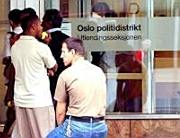 Numbers released by the UN’s High Commissioner for Refugees (UNHCR) shows that no other country in the world has seen a bigger increase in the arrival of individuals applying for political asylum than Norway.
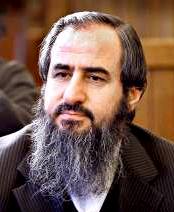 Krekar, who has been under an expulsion order after being determined a threat to Norway’s national security, initially came to Norway as a refugee from Iraq in the early 1990s.
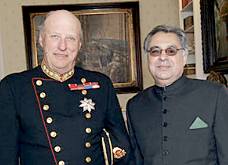 Ambassador: Caricature is Terror