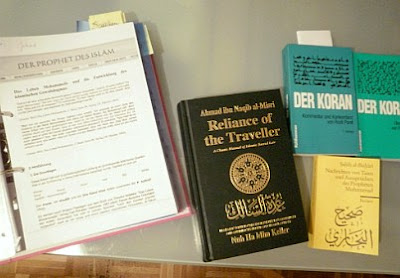
In a flashback to the opening of last month’s trial of Geert Wilders in Amsterdam, our Flemish correspondent VH has translated a portion of the plea (which seems similar to what we term an opening statement) by Mr. Wilders’ defense counsel, Bram Moszkowicz.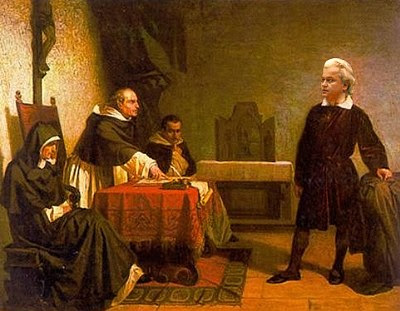 Part of the plea by Mr. Bram Moszkowicz in the Wilders Trial
Translated by VHMr. Chairman, members of the court, members of the prosecution, today, Mr. Chairman,
I defend a dissident, and his name is Geert Wilders, and who’d have thought of this in 2010, in the Netherlands.
Since yesterday, Mr. Chairman, I have constantly had an image in my mind, and I cannot get rid of it, one that is somewhat characteristic of this process, and which also shows the absurdity of it.
The lawyers for the aggrieved parties took the floor; it was a motley crew, partly also deaf. Ms. Prakken suggests, as one of the speakers on behalf of the aggrieved parties, that Mr. Wilders had talked about ‘a tsunami of Muslims’, while she knows very well, or at least should know, or could have known, that my client spoke of a tsunami of
Islamization. That is something quite different. But that is not at all I wanted to say at this point. All the lawyers for the aggrieved parties failed to follow the framework in which they were allowed to speak. Clearly that context has been outlined a number of times by your court. And then as recently as yesterday, a lawyer refuses to rise for judges in the Netherlands, and we, not I, permit his refusal.
The man took the floor and compared my client in passing to Hitler. Unlike me, my client Wilders believes that the man may say this.
The lawyer I am talking about does not rise for the court, because he takes our system not to be his. At the same time, Mr. Chairman, members of the court, he does make an appeal to our system when it suits him, by wanting to make to use of the opportunity provided by our law to speak. The world upside down. See here the trial against Geert Wilders in a ‘nutshell’.In Florence in 1632, Mr. Chairman, members of the court, the book
Idelologo by Galileo Galilei appeared. A polemical treatise in which the geocentric view, current within the Catholic Church, was more or less made ridiculous. That was contrary to all opinion, and did not go unnoticed. Galileo had to justify himself to the clergy, and renounce his ideas. Rehabilitation followed much later.
Wilders does not compare himself with Galileo, but does reflect on him. Someone who goes against the prevailing doctrine. Someone who does not let himself be gagged by religious institutions and conventions. A dissident in the current era as Galileo was a dissident in his own. Someone with a different view.
Even so, the ideas of Galileo could not be curbed. Some things you cannot hold back. Even after his conviction, as the perhaps apocryphal story goes, Galileo said,
‘eppur si muove’. Which means ‘and yet it moves’.
The case against Galileo should not have proceeded. Galileo based his argument on empirical material, and that went against the prevailing dogma.
 This Irish government finally caved in to pressure and accepted a bailout from the Eurozone, with additional help from the British government. The decision caused some of the smaller Irish parties, including the Greens — who objected to the planned austerity measures — to withdraw from the governing coalition. This forced Prime Minister Brian Cowen to call new elections for January, although he will not resign until after the new budget has been approved.




 Martin Bosma is a Dutch member of parliament for the PVV (Party for Freedom), and a close associate of Geert Wilders. Back in September, immediately prior to the start of Mr. Wilders’ trial,