Showing posts sorted by relevance for query shelagh. Sort by date Show all posts

Saturday, August 20, 2005

An Open Letter to Cindy Sheehan

 
I had to look up your name since I have avoided your story as much as possible. Not out of a lack of compassion for your sorrow, but rather because of my own fragility and the sorrow I carry for my own dead daughter.

Here’s what I know about your story — and when you think about it, to have learned this much despite not having a TV and making an effort to avoid learning about your odyssey, it’s amazing I know as much as I do.

Your son Casey was a soldier and he died in Iraq. At first, you were able to maintain in the face of this catastrophic loss. I believe you even met with the President at one point? See — even I, with no access to regular media and a real wish to avoid your story, even I know these things. Or maybe what I “know” is some garbled version of what has been going on for you in your public grief.

This is a guess — an educated guess from one mother of a dead child to another — but I think things began to unravel as time went on and the reality of Casey’s complete and total and life-long and irrevocable absence hit your consciousness like a fist sinks into a gut. And the bunched knuckles kept coming back to deliver blow after unending blow.

One picture I happened upon in the grocery store showed you on your knees. I presume it was taken in Crawford since someone who didn’t know me well wanted to discuss your story and said you’d gone to President Bush’s ranch. I remember turning away from your face as you knelt there. Yours was a sorrowful visage, a broken face like the reflection from a fractured mirror. My heart twisted for you even though I barely glanced at the picture.

Your grief has served to polarize others. Some say you’re being used, some dismiss you as “crazy” — and tell me what mother of a dead child isn’t crazy? You’ve been cheated of your son; you walk through the valley of the shadow of death and no one comes to greet you. There will never, ever again be a laughing bear hug from this son grown tall and handsome.

When a husband or wife dies, we call the surviving partner the widow or widower. Why do you think it is that there is no one word to describe our condition, Cindy? Mother-of-a-dead-child is the best we can do? The lack of a name gives you some inkling how much our culture avoids the knowledge of this sorrow. If we named it we’d have some power over it. But the condition you and I share is unnamed because since time immemorial parents have dreaded this loss. It is the worst. There is nothing else that can be done to us. A motherless child is a pitiful creature and carries a life-long emptiness he or she tries to fill with other grown-ups. A childless mother is a crazy person and nothing can fill the hole, not if she had a baby a year for the rest of her life.

Do you have other children? I have three. And when people ask me, pleasantly, “how many children do you have?” I look at them blankly. It is all I can do to not to run screaming from the room.

Here is where I liken my experience to what is happening to you: after Shelagh’s sudden death, after the Rescue Squad carried her off and I watched them disappear down the drive, after the Medical Examiner returned her body to us, there was lots to do. The first morning I awoke I heard her say distinctly, laughing, “Mom, welcome to the first day of the rest of your life without me.” I think she was trying to make it easier in her Shelagh way.

There was so much to do. Her children needed clothing for the funeral, there were burial arrangements to make, a minister to call, family visitation to be arranged, a burial service to be created. So many, many people to notify. Elderly grandparents and a large contingent of Irish relatives to talk to and arrange for flights. As the days passed, I thought to myself “I can do this. I can just keep having this whole thing to organize and plan and I’ll be okay. As long as I never have to bury her, I’ll be fine.” Yes, this is crazy thinking. Even then, I vaguely knew that.
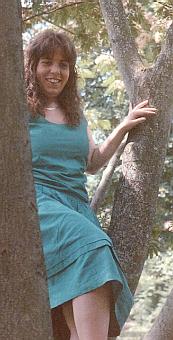
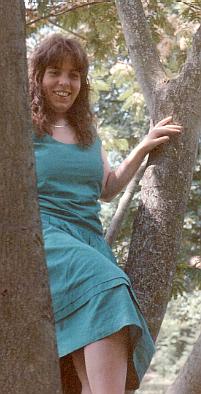
ShelaghWhen her body arrived back from the Medical Examiner’s one of her brothers and I wrapped her in a winding sheet. Shelagh could never decide among Catholicism, Judaism, and a local bikers’ church for misfits. So she went to all three. We wrapped her in linen with a small cross embroidered on one end. A priest came to anoint her with oil. Her therapist came very early in the morning and left a small token of their work together, a secret symbol between them (though I knew what it meant). I gave Shelagh some of the lily of the valley left in the garden and her grandmother gave her a rosary. Her children gave her stuffed animals and drawings. She left the room shrouded in fair linen and surrounded by those things we knew she’d loved. The next day she was buried after a funeral in the bikers’ church. Later everyone said it was the most joyful funeral they’d ever been to.

After she was buried, I went back to the church to pay the minister before going on to the hotel to visit with my former in-laws, her father’s family. As I walked into the rest room there, I saw the trash can overflowing with the paper programs from Shelagh’s service. Immediately, I heard my daughter’s laughing voice exclaiming, “Mommm! Don’t these people realize I’m immortal?” She seemed amused and offended at the same time. In an automatic gesture of soothing her, I bent down to pat the overflowing papers… see, we are crazy.

Let me tell you the most important thing, Cindy: none of this matters. Not one piece of it. The only important part, the only piece with any real existence is Casey’s death. He is as gone as though he never existed. And you are so filled with sorrow and grieving you do not see how you will ever turn back from this road of vengeful crying out like some prophet who has wandered in from the desert.

Perhaps you never will. Not all of us come back, and certainly none of us return as the people we were before our child died. We are some other person, a stranger even to ourselves sometimes. But you will be less afraid of death yourself. Your son has gone before you, and that is harder than our own passing. Much, much harder. The lump in your throat will probably never disappear either.

As you’ve no doubt discovered by now, men and women handle their griefs very differently. Shelagh’s father and I split the cost of her funeral. I paid for everything else and he did the flowers (I’m afraid I said “f*** the flowers” — in my mind she had her beloved lily of the valley and what else was necessary or even good?) and he also paid for the burial plot.

Well. When you own a burial plot it is you who decides what headstone will go there. And if you decide there will be no headstone, then no headstone it is. So my beloved Shelagh, despite our entreaties, lies in an unmarked grave and I cannot bear to go visit where she lies there because of that.

For a long time, I considered her father’s behavior simply cruel and evil, but having had these two years to contemplate such a bizarre thing, I have come to think that perhaps it is his way of not having to face her death. No headstone? No dead daughter. It makes a crazy kind of sense, doesn’t it? Anyway, one day her brother called me and said he had a message from his sister. In a perfect imitation of her tossed-off wit, he said that Shelagh had told him, “Tell Mom not to worry about it. I always lived in substandard housing anyway.” It was so exactly her voice and humor that I started laughing. I still smile when I think of it.

For a long time, too, I hated time passing. Each day carried me further downstream away from Shelagh. I resented each holiday, each special occasion, things she would have wanted to be there for — as when, several weeks after her death her youngest brother had his Eagle Scout ceremony. Now, after several years, I have rearranged the furniture of seasonal celebrations. We do different things so that the hole where Shelagh is supposed to be doesn’t show so plainly.

Other bereaved parents tell me that your child will visit you. Some special “thing” you had together. That hasn’t happened for me yet, though the day she died we had terrific tornadoes and blackened skies. They were a greenish-black and the clouds moved with incredible speed over the green fields of May. One thing that does happen to me, like an emotional ‘twitch’ is that when I see a date written down, I automatically parse it: the date is either when Shelagh was alive or it is A.S. — After Shelagh. And the date of her death is like a gong…May 8th, 2003, May 8th, 2003, May 8th, 2003….

I don’t know what kind of hell your loss is creating, Cindy, and I can’t pretend to offer any solace. There simply isn’t any. Some things are unbearable and this is one. Nor will I suggest that you be brave. To hell with being brave. Wail until you can’t make another sound. Then sing this. It was one she used to have her brother play on his guitar:
    You say I took the name in vain
I don't even know the name
But if I did, well really, what's it to you?
There's a blaze of light
In every word
It doesn't matter which you heard
The holy or the broken Hallelujah
Hallelujah, Hallelujah
I did my best, it wasn't much
I couldn't feel, so I tried to touch
I've told the truth, I didn't come to fool you
And even though
It all went wrong
I'll stand before the Lord of Song
With nothing on my tongue but Hallelujah
In the end, Cindy, we are all stripped bare — nothing we have really belongs to us. In particular, we don’t have our children. Much as we cherish them, they belong to themselves and they belong to God. If you can open your hands and place them together in prayer, rather than bunching them in fists of rage, then you can let Casey go home… just let go.

If you don’t, then Casey can’t come back to you.

With my thoughts and my prayers for all of you who loved Casey,

Dymphna

Friday, August 26, 2005

Concrete Angel

 
Concrete angelThe response to An Open Letter to Cindy Sheehan was more than I expected. I no longer remember what it was I thought the effect would be on others; it was a cri de coeur, one woman to another. Having now heard her voice a few times, I realize the effort was futile. Had I known that ahead of time, of course I wouldn’t have attempted such an undertaking.

But had I not done so, the letters and comments and responses on other blogs could not have done their healing work on me. I forgot: it is others’ response to our pain which allows us to endure — even to metabolize and process — the unendurable.

So my response in turn is, of necessity, a visceral gratitude. Wonder and gratitude that so many share my experience and were moved to their own epiphany in reading of mine. Words are indeed “the instruments we use to beat out tunes on broken drums…”

All those who have had someone beloved wrenched from them know only too well the nightmare of the first anniversary of that sudden bereavement. It is like another small death in itself; a fist which waits for you in the dark. Even though you know it’s there, you cannot avoid it, you can only wait for it to descend.

Shelagh’s brother, the Baron’s Boy, was a senior in high school when she died. About to graduate, about to receive his Eagle Scout award, the time became a memory deeply etched by his sister’s sudden death. The following year, on that first anniversary, he was a freshman in college in the midst of exams. He paused there, coming out of class, to post his thoughts on his first year without his sister. With his permission, I give you his thoughts on that first anniversary of Shelagh’s death.

Here is that post:

A statue stands in a shaded place
An angel girl with an upturned face
A name is written on a polished rock
A broken heart that the world forgot


Through the wind and the rain
She stands hard as a stone
In a world that she can’t rise above
But her dreams give her wings
And she flies to a place where she’s loved,
Concrete Angel...


Technically, this post should be for tomorrow — but seeing that I just took a test dealing with, among other things, Dissociative Identity Disorder, I figured it was fitting that I do it now.

One year ago tomorrow was Thursday, May 8th, 2003. I woke up to a disorganized househould. It seems that my sister’s boyfriend had called our house, hysterical. She was unconscious and not responding to CPR, and he had already called the ambulance. My mom was in tears and my dad was grim-facedly getting both of them ready to go over to her house. However, I still had to go to school, so I got in my car and started driving.

I don’t really remember what passed through my head on that drive — my sister had had numerous “incidents” before and managed to find her way through them. After 30 years of living with DID I guess she’d had to adapt to crazy situations. However, something changed when this song came on the radio. “You Were Meant For Me,” by Jewel. I’d heard it a lot before and kind of liked it. But then it got to the refrain:

Dreams last so long
Even after you’re gone...


I guess I knew at some level that this was one scrape Shelagh wasn’t going to be able to get of in one piece. And sure enough, around 1:00 that afternoon, Dad and my brother Joe came to pick me up at Fuqua [School]. She had been dead probably before her boyfriend had even made the call.

Before you think I’m making this into a sobfest, let me make one thing clear. I don’t cry easily. I used to a lot in middle school, and through negative conditioning I learned to hold it in. I never cried for Shelagh at her funeral; I guess I was almost happy, in a way, that her pain was over. But I cried for her many times after, because, as my brother Jamie put it, “No one ever understood me like she did.” There have been too many times this year when I felt like I needed to talk to someone and realized that that person was my sister. I know she can still hear me, but one-sided conversations just aren’t the same.

But looking at all of this another way — I’m never going to let anyone, not myself nor anyone that I’m close to, go gently into that good night. If Shelagh could hold on and weather the storms, then so can we. One of her bad days would probably send most of us “normal” people into a depressive tailspin. She lived with demons, both internal and external, that are probably better left undescribed. And yet she kept on, till the age of 40, until, as Thomas Hardy said in Tess,
    “‘Justice’ was done, and the President of the Immortals had ended his sport with [her].”
Nothing I could have done would have healed her pain. And indeed, not much any of us could have done would have accomplished much. We could only mend as many cracks as we could before the walls came crashing down. But I’ll be damned if I let anyone I love fall victim to a pain like that. No-one will suffer like that on my watch as long as I have my strength.

So here’s to Shelagh. If anyone deserves a happy afterlife, it’s you.

So, so you think you can tell
Heaven from Hell? Blue skies from pain?
Can you tell a green field from a cold steel rail?
A smile from a veil? Do you think you can tell?


Did they get you to trade your heroes for ghosts?
Hot ashes for trees?
Hot air for a cool breeze?
Cold comfort for change?
Did you exchange a walk-on part in the world for a lead role in a cage?


How I wish, how I wish you were here
We’re just two lost souls swimming in a fishbowl year after year
Running over the same old ground, what have we found? The same old fears,
Wish you were here...


— Will, May 7th, 2004

Monday, May 08, 2006

Not The Kurds After All

Today was going to be a long post on the travails of the Kurds. I’ve been doing some research (and find Turkey more perfidious than I’d thought already), looking at Kurdish sites – the English versions, anyway – and just generally immersing myself in the current situation. We’ve even blogrolled a Kurdish American site.

ShelaghBut today is May 8th, the third anniversary of my daughter’s death. However I try, I cannot wrap my mind around an ongoing genocidal tragedy when faced with the loss of one of my children. We humans are hard-wired that way or we wouldn’t be here, would we?

For those who know the story, told partially here, you are aware that Shelagh has lain these three years with no gravestone to mark her passing. This has been the source of a grievous sorrow.

I am told by someone who has seen it that her tombstone has finally been allowed to be erected. The reality brings both a sense of relief and a final sorrow. I think I understand how they could let her lie in anonymity these past three years, but it has been the source of much pain nonetheless.

And now she lies in a grave in a shady glen, her visit on this plane marked forcefully, finally, in granite. Today I go to see her grave for the first time in three years: I could never bring myself to go and look before this, to see the blank green sward, a place you could walk across without noticing anything.

The cemetery is a pretty place. Privately owned and maintained, I have always been drawn to it. Back when the Baron had the time and space to paint, he did a landscape there, a beautifully rendered maple in all its Autumn colors. The piece sold almost immediately and now I wish I remembered to whom. Would it be tacky to beg for it back, do you think?

Owning a painting or photograph of a graveyard is a good thing: it reminds you of what awaits you and all you love. If you don’t have a memento mori, I recommend acquiring something which evokes for you the final ending for us all. It is a movement toward wisdom when you can look with equanimity on what is to come.

The death of children, as painful as it is, makes the prospect of one’s own mortality less terrifying. We want to go before them; that is the normal order of things. But once they are gone, our own hold on life becomes a bit more tenuous; a little less tightly clung to. Shelagh was terrified of dying but now that river has been crossed and all her other terrors are at an end, too. This knowledge brings a perverse comfort sometimes. No one can hurt her anymore.

Lily-of-the-valley was her favorite fragrance and roses her favorite flower. So I am bringing both to leave with her. The lily is almost finished flowering, but the rose bush someone gave me when she died is blooming now for the first time this year.

Perhaps by her fifth anniversary, I will have finished her memorial garden. A small space under the dogwood tree with a bench, some moss underfoot, and slate stepping stones taken from the first hospital she went to for relief from her suffering, and the one that turned out to be the most kind to her.

They are tearing the old building down now; in the end, everything goes.

I leave you again with the poem she seems to have written to us on the day of her death. It came to the author in a piece, as he was driving to pick up her brother and break the news…

Remembering Shelagh

Of the many who knew the many of you
there were few enough who knew you well,
and of the stories that are ours to tell,
a myriad versions, and all of them true:

A gutsiness of life and love,
an eyebrow arched, a toss of the hair,
the level gaze and the withering stare,
a fist of iron in a velvet glove.

Mother and daughter, sister and friend:
how shall we cope with your laughter gone?
Too lately begun to have reached this end,
a spring afternoon on a shaded lawn.
Accept if you will this bitter rhyme,
and be with us here this one last time.

May 8, 2003
E.S. May


*   *   *   *   *   *   *   *   *   *   *   *   *   *   *

We deal with loss, especially the deaths of our beloveds, incrementally. But that is not how chldren come to us. They arrive in one swooshing, sluicing suddeness.

Here is the poem I wrote about six months after her death. It was the beginning of acceptance of the inevitable:

YOUR DEATH

When I am forced to hold this leaden globe
—Heavy and opaque and unwelcome—
I have to use both hands to grasp it fully
I have to sit down to encompass its enormity
On my lap. Even now someone lurks
in the nearest shadow waiting to thrust it at me
As I sink into the nearest chair.

Into the thin light of that irretrievable March morning
You arrived in a rush, as afterwards, you were always to do.
When they thrust you into my arms,
I was astonished most by the pink weight of you.
Fanning out the clutch of one tiny damp hand
I said “how can such a small being weigh an eternity?”
Your remarkable black lashes blinked back at me.

Now there is only left to sit, weighted by this grey globe.
When I lean over awkwardly so my ear can rest
Against its uncomforting, rounded mass
I am hoping to hear within your faint laugh,
or the far-off scree of gulls.
But there is only this: the rise and fall of waves
Breaking against the listless shore; then as they recede,
The skitter of ghost crabs in the whispery sand.

December 14, 2003


Requiescat in Pace, Shelagh Marie. May angels be your friends.

Saturday, May 12, 2007

Love Triumphs Over Death

The Baron has been manfully holding down the fort these last few weeks, as I wandered into Limbo and then managed to find my way out again.

It is good to be back in the light.

This happens every May since my daughter died in 2003. I thought it would get easier as time eroded the edges of my grief. But this year was the worst, even though logically it should be easier. She finally has a headstone, and they attached a small vase for flowers. This time I was able to dig up some lily-of-the-valley from behind the large pine tree where it has grown since we first moved here. It was her favorite flower, so I packed soil around some of the roots of plants still in bloom and carried them to her. I put some freesia bulbs underneath the soil int the vase, hoping they will begin to emerge as the lilies die off.

I still haven’t figured out why the trip to Limbo was so dark and so long. In looking back on our posts, I can see mine trail off as we came into May. Life became a grey slow motion film...even as the Spring flowers began to take hold. The rhododendrons were lovely, but beauty was painful and to be avoided.

Grief is a mysterious process. It has all the ups and downs of a roller coaster, or a child learning to walk.

Shelagh in the mimosa treeI began seeing young women going about their daily lives - putting groceries in the car, standing in line at Starbucks waiting to order their lattes, walking in front of me talking on their cell phones. How can there be so many of these women with long brown hair, a confident stride, or a fleeting smile that resembles Shelagh’s? Each almost-encounter leaves me breathless for a moment; I sit on the nearest bench waiting for my solar plexus to recover from what feels like an existential fist. A merciless fist.

If you’ve ever read Michael Connelly’s police novels, you know how dark they are. His main character, a loner detective named Bosch, finds out he has a child, a young daughter, from a relationship of several years ago. Connelly’s descriptions of this man’s feelings are spare and telling. When someone asks him how it feels to be a father, he replies, "it is like someone holding a gun to your head." I know what he means: when you become a parent the world feels less safe; risks that were okay for you to encounter are definitely not all right for your child. Yes, indeed. Parenthood is a gun aimed right at your heart. The safety is off and the gun is cocked.
- - - - - - - - - -
So May 8th has come and gone for the fifth time now. The cemetery was as pretty as it was that first May 8th, when we arrived there to bury Shelagh. Long rolling swathes of green grass neatly trimmed, with dogwoods blooming at the edges of the woods, and copses of evergreens scattered through the cemetery. As we walked to her grave, I thought how fortunate it was we could not see the future. Decades ago, when the Baron was a landscape artist, he used to paint here. There is something timeless in mortality. And yes, I know that sentence is a contradiction, but so is death.

We, Shelagh’s faithful remnant, gathered by her burial place to talk about our memories of the funny, wicked person who was my daughter. Having forgotten to bring the Book of Common Prayer, devotions went unmentioned. Just as well... they have become a background hymn, played in a minor key, to the march of days that carry me further and further from the real, living, breathing and spirited girl who was my only daughter.

And then May 9th arrived as usual -- I never believe it will. The sun came up, the coffee was made and gratefully consumed, and I arose as though I had moved past a physical barrier and returned to the land of the living.

It is truly good to be back. The sword I dropped at the gates of Limbo was waiting for me on the other side when I returned. And meanwhile, the Baron kept Gates of Vienna standing athwart dhimmification as he has done these last few years.

That is why I call him Saint Baron. Every time I fall down that black well of unbearable grieving, he waits patiently for me to return. He hopes for me, he has faith that I will make it back. It is truly a wonderful and mysterious thing to be loved.

But I don't need to tell you what you already know: love triumphs over death every time.

Thursday, September 15, 2005

Coming Back to Life...Part Way

 
Thanks to everyone who wished me well following my fall from grace. I am now recovered enough to sit in front of this screen for short periods, though I’m still using the ‘sick’ bed the Baron set up for me in the laundry room since it means fewer steps to the computer, the kitchen and the bathroom.

Back in the old days, one could make meaning out of pain by “offering it up for the souls in Purgatory.” Now that Purgatory has been dispensed with, one must simply endure it and that makes the whole thing more impersonal and therefore harder. Sometimes I do miss “the power of the fire and the beads” of my childhood faith. Fortunately, movies like Sixth Sense come along sometimes and I get to indulge my intuition that there must be some interval of wandering after death.

The Baron’s grandmother died suddenly of a heart attack. She was at the dinner table and simply keeled over. Grandma Belle was a rather forbidding figure to the young Baron; she had great moral authority in the family and was one of those old-fashioned southern matriarchs. Did only southern women get named “Belle”? I never heard the name while I lived up north but it’s not uncommon here, especially for women of her generation.

After Grandma Belle died, Grandpop eventually remarried. His new wife was a widow also and it was understood that when Grandpop died she would remain living in the house until her death. Which is what happened; after she died the house then reverted to the Baron’s family and his aunt and uncle eventually retired there. Family members go to Grandpop's to visit sometimes.

On several occasions there have been disturbing experiences.

The first one I heard of was from Shelagh, many years ago. She came out of the bedroom to which she had been assigned during our visit and told me she wasn’t going to sleep in that room. There was a woman in there who didn’t want her in the place. Poor Shelagh had more experiences with the thin places in life than she ever wanted.

The second incident happened with the Baron’s niece. She, too, felt the presence of a woman who was unhappy. Nicki, always more practical, airily dismissed her night visitor.

The third occurrence was with the Baron himself. He woke one night to ‘see’ Grandma Belle at the foot of the bed. She seemed her old forbidding self and was agitatedly folding laundry. Gradually the apparition faded and the Baron went back to sleep.

Shoot. All the times I've slept there and she never visited me. I have an idea it’s because we’re so much alike. I know that in the afterlife I shall be forced to fold all the laundry I've let moulder in the basket in my time, having to return it to the dryer again to remove the wrinkles caused by sitting so long. Either that, or I’ll scare the bejayzus out of someone sneaking into the kitchen for a midnight snack because there my ghostly remains will be, distractedly cleaning out the refrigerator. I don't think the Powers That Be will accept my excuse, which is that I believe there is a Laundry Fairy. What happens is that if you leave the darn pile sitting there long enough, she'll show up and take care of it for you -- including putting all of the clothing away. The fact that no one has ever shown up to do this little chore doesn't shake my underlying hope that she's merely been delayed and will arrive any day now.

At any rate, thanks to all of you for your thoughtful notes. It’s comforting to be remembered.

Thursday, September 08, 2005

A Dollar Short and a Weasel Long

 
Watcher's CouncilYikes! This is most inexcusably overdue. As is last week’s posting of winners. But first things first.

The Council Winner for the August 26th vote was Gates of Vienna for the letter to Cindy Sheehan. You might want to read the follow-up, Concrete Angel, which is a reprise of a post written by her youngest brother on the first anniversary of Shelagh’s death. A year later, Will wrote his post about the helplessness and love he experienced.

Meanwhile, though, look at the second place: Dr Sanity’s Shame, the Arab Psyche, and Islam. At some point, Gates of Vienna will do a post on the Arab culture and shame. It won’t be as thorough as the good doctor’s but it will be a slightly different perspective. Anything we can understand of this phenomenon will go a long way toward healing it — curettage might not be a bad idea.

Alpha Patriot took first place in the non-council posts for his astute overview of the conflict between the Arabs and the Jews that has led inexorably to the sad removal of the settlers in the Gaza Strip. He has all the dates, places and names. This is not a story which is going to go away; Gaza is merely the latest chapter.

There is much disagreement as to whether this strategic move was wise. At Gates, with fingers crossed and a small pleading to Fate, we think it may be a smart move — one that is three moves ahead of the wily Hamas terrorists who plan to make hay with the “retreat.”

All the rest is over at the Watcher’s page. See if you agree with the vote.